

The People’s Seeds Systems learning exchange is a learning exchange on the seed systems as practiced in the different countries in Asia, particularly those led by small food producers. This is organized and led by the APEX Transforming Food Systems Working Group and enjoins the members of the team as well as those APEX partners who are interested in learning and contribute in the knowledge building among partners. This activity comes at an opportune time when countries are now exploring more repressive policies on seeds as part of their trade commitments, thus catering the interests of multinational companies and private institutions.
The learning exchange was a combination of: a) sharing and discussions on the issues surrounding food sovereignty and seeds sovereignty from the global to country levels, and b) learning exchange through visit to communities in West Nepal that are taking a stand and creating their own systems to assert their rights to food sovereignty and seed sovereignty through agroecological practices and systems- from collecting to saving seeds, to sharing and cultivation, among others.
The learning exchange was held in Kathmandu, Nepal on October 19-20 and West Nepal region on October 21-23, 2024, with the Social Work Institute as the host. The learning exchange activity was attended by 23 people from 15 organisations (BARCIK, SHISUK, Keystone Foundation, SRED, ORISSA, Caritas Dalat, Caritas Nepal, SWI, PKMT, KMP, APC, VIKALPANI, MASIPAG and PANAP) and seven countries (Bangladesh, India, Nepal, Pakistan, Philippines, Sri Lanka and Vietnam).
The objectives of the learning exchange are as follows;
- To have sharing and exchange on the global and national trends, and policies affecting food sovereignty, agroecology and seed sovereignty
- To learn about the importance of setting up a community-led seed systems that entails building seed banks, capacitating farmers and communities in seed protection and documentation.
- To visit and learn from the community-led seed banks in Western Nepal and know more about their seed documentation work and the method of seeds exchange among farmers and communities
- To learn the seed systems of the participating partners if any.
Activity For The Global Month Of Solidarity With Peasants
The first part of the learning exchange is a two-day study session to discuss the role and impacts of international finance institutions (IFIs) and policy i.e. International Union for the Protection of New Varieties of Plants (UPOV) on the peoples’ seeds of sovereignty. This study session also brings out the struggles and context of each country in relation to IFIs and UPOV. The discussions from these sessions were also fed into the learning exchanges and workshops in West Nepal.
Furthermore, this study session is also part of the Global Month of Solidarity with Peasants led by the Asian Peasant Coalition (APC), People’s Coalition on Food Sovereignty (PCFS) and PAN Asia Pacific (PANAP).
Country sharing on land grabbing and its impacts on peasants and seed sovereignty and the climate crisis
Global overview the World Bank Programs and policies that results to land grabbing, food insecurity and climate crisis by Agatha Canape, Ibon International
Agatha Canape from Ibon International, an institution that mainly works on the capacity development of Southern movements for peoples’ rights, towards People-Powered Democracy, gave a global overview of the World Bank programs and policies and how it has affected land and resources, peoples’ food security and how it has also contributed to the climate crisis.
The photo below summarises the impact of World Bank role in the crises;
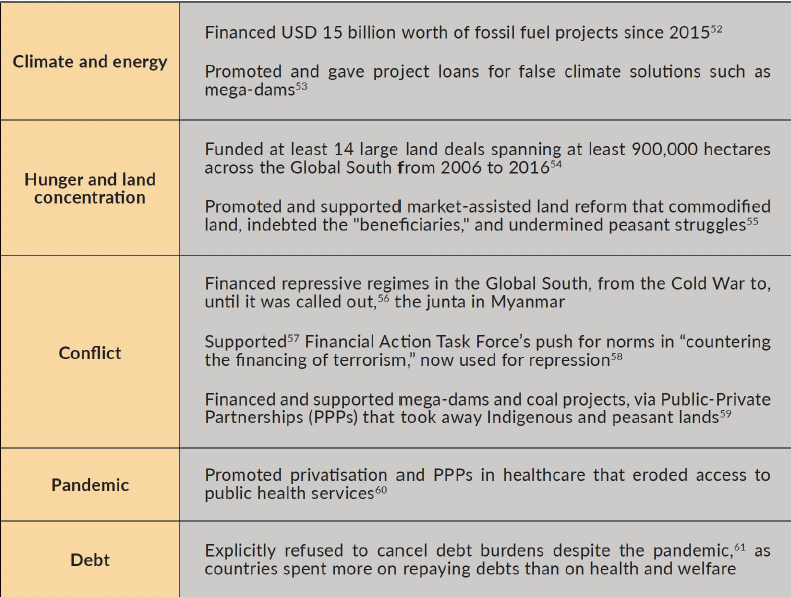
To deepen the awareness on the World Bank policies, Manga encourages the participants to look into their own governments’ policies and see how they are shaped and influenced by the World bank
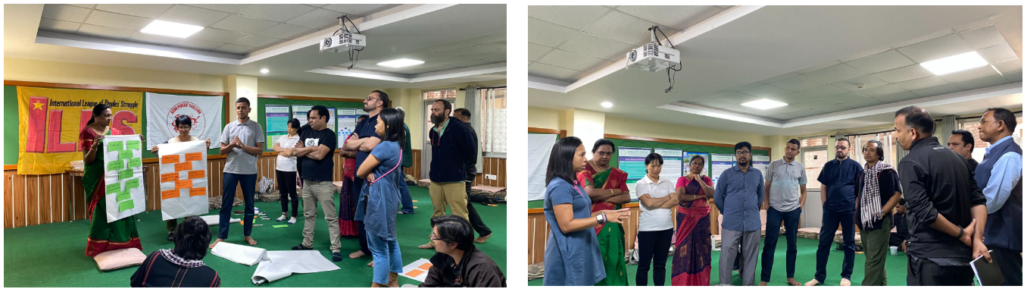
The next part of this session is the country sharing from Indonesia, Philippines and Pakistan.
According to Catarina Estavillo of APC, landlessness is still the fundamental problem in the Philippines – no legal ownership, no effective control over the farmlands and insufficient lands that are enough to feed their family and be a source of livelihood. Based on their recent research, seven of 10 peasants are landless. Furthermore. Big landlords and compradors, who are not farmers themselves, own vast tracts of land. Four families own an estimated 176,911 hectares of land, where most of them are used for non-agricultural purposes e.g., subdivisions, plantations, commercial, land banks.
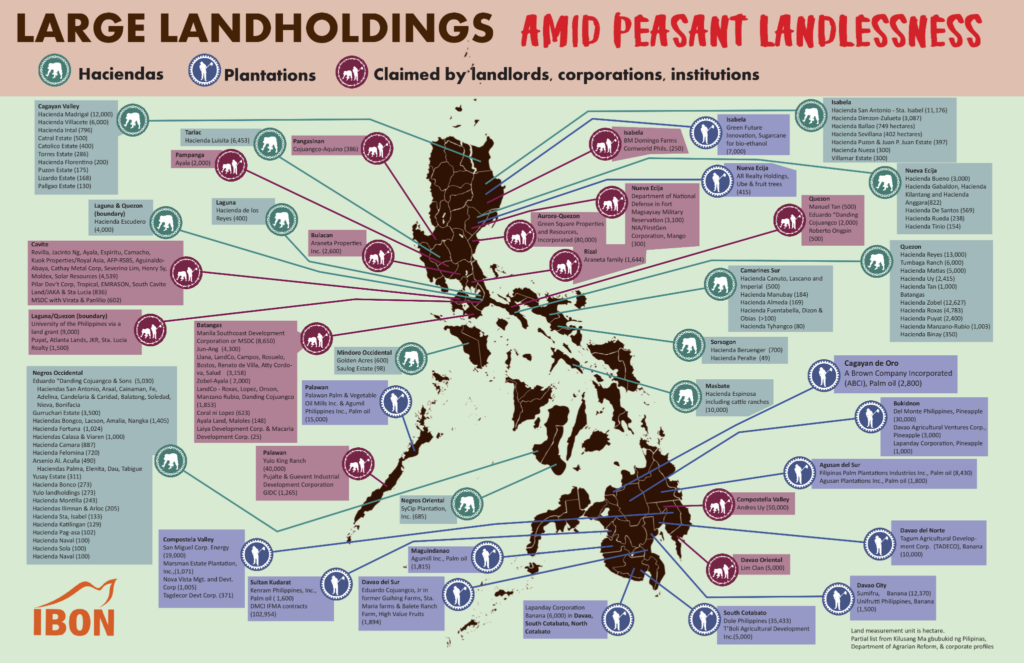
(Infographic from Ibon Foundation as presented in the learning exchange)
Aside from peasant landlessness, peasants and farmers who already till their own lands that are won through collective struggle, they are under threat of land grabbing. Some of these violent land grabbing incident are in Hacienda Yulo (53KM South of Manila) and farmers in San Jose del Monte, Bulacan (34KM North of Manila).
By the Philippines’ land reform programs, the farmers who are tilling their land for at least 20 years are the priority beneficiaries of the said land. However, due to the collusion of government and corporations to take over lands and turn them into non-agricultural lands, farmers and allies are continuing their fight for land rights
Another struggle that Filipino farmers face is how pesticide farming helps in the land grabbing. It is easier to declare farmlands into non-agricultural lands once it is tested and found that it is no longer productive due the level of acidity etc. Former Philippine president Rodrigo Duterte issued an administrative decree that fast tracks the land conversion of farmlands in the Philippines.
Amidst the relentless attacks on farmers’ rights in the Philippines, the peasant movement continues to advocate and assert their rights. Catarina also shared that part of their strategy is having a platform where they would present the “alternatives” to the masses. Alternative politics, alternative economic policies and alternatives solutions from the harmful ones being pushed by the corporations and the Philippine government.
As part of the peasants’ organisations policy advocacy, they have lobbied and helped progressive and allied policymakers crafting a genuine agrarian reform bill which mainly advocated for the free land distribution and support to the food production. The bill is being filed every year but the Philippine Congress will not pass it. But Filipino peasants are still hopeful that one day they will take the ownership of the land they till.
In Pakistan, small food producers are resisting the corporate takeover of the livestock and dairy sector. According to Roots for Equity and PKTM, the transnational companies are utilising the international trade agreements such World Trade organisation’s (WTO) as Sanitary Phytosanitary agreement and the Technical Barriers to Trade Agreement tp push small producers out of the market. Meanwhile, state government are already
Impacts of UPOV on seed sovereignty
- The corporate capture of seeds and its impact to agriculture and the people’s food sovereignty by Arnold Padilla, PANAP
- UPOV and how its undermines seed sovereignty, Alfie Pulumbarit, MASIPAG
Field visit in Maigar community
On the fourth day of the exchange, 22nd October, the participants headed to the field to visit the Maigar Community Seed Bank located in Banke, West Nepal. The participants were divided into 4 groups, rotating around the facilities of the seed bank. They were also tasked to learn from the community, particularly the following information:
- What the community seed flow is?
- How the community is doing protection, conservation, and promotion of local seeds?
- What is the cultural link between their community seed bank and the community?
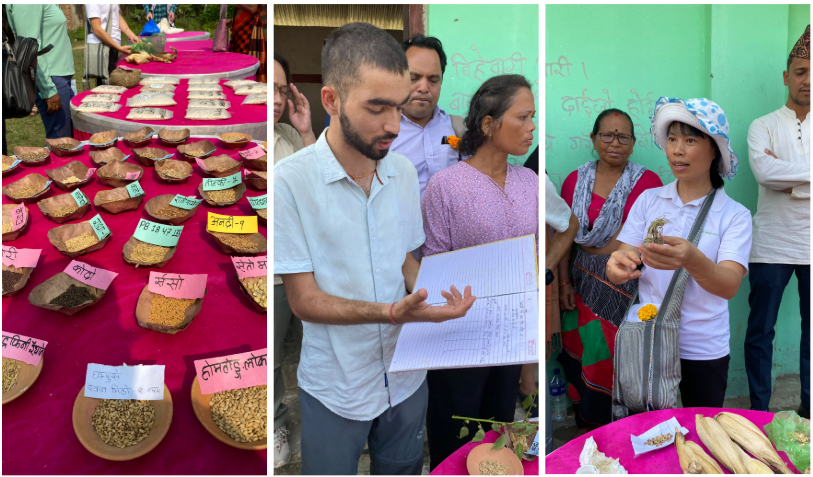
The Maigar Community Seed Bank consists of a trial farm and seed storage facility. The trial farm hosts 28 different traditional and improved varieties collected from the Himalayan, hilly, and Terai (lowland) regions of Nepal. It is roughly half a hectare, with plots allocated for the different varieties. The seed storage facility is a small building which houses bottles for storing seeds and a small office space. Originally stored in Denhari, traditional earthenware jars, the seeds are presently stored in airtight plastic bottles with rice and wheat hulls as desiccants. Notably, Maigar community facility also has an organic vegetable farm where crop diversification and organic soil amendments are practiced.
Referring to their seed system, Maigar community members shared that, due to the limited land area of the trial farms, their strategy is to distribute seeds to farmers and conserve the harvested seeds. Seeing the trial farms, they select what type of seed is good. The farmers get what they need and collect from there. They also organize seed exchange programs weekly along with trading vegetables, handicrafts, and processing. A seed exhibition is also held biannually, and they added that this coincides with the 16 days global action for agroecology.
Maigar community expressed the importance of protection, conservation, and promotion of local seeds. Traditional varieties have disappeared since the green revolution and chemical farming. But in 2018, they held the first seed exchange which promoted the resurgence of traditional rice varieties. The practice of trial farming, seed banking, and seed exchange and exhibition is their way of protection, conservation, and promotion. Notable varieties include the Sadta variety which is ready to harvest in 60 days from transplanting, and the Anandhi variety which has a cultural significance for marriage and pain relief.
Speaking about culture, Maigar community shared the cultural link of their seed system. The Barghar traditional leadership system is interlinked with indigenous varieties because of its cultural importance as they are used in rituals. This leadership system employs households to select leaders that have a role in agricultural, communication, and religious affairs of the community. Leadership is voluntary, and the households give rice paddies to the three leaders who serve in these roles. Women may also be Barghar leaders, as the households push for good leaders regardless of sex. In order to develop good leaders, Maigar coordinates with the local government to capacitate Barghars. For the promotion of agroecological practices, the Barghar caters to people who have interest in such practices. A youth network is also built, promoting the benefits of agroecology. They also conduct protests to urge the government against hybrid seed distribution.
Visit to Janajagaran Samaj, a local seed bank cooperative
After visiting the Maigar community seed bank, APEX participants continued to Janajagaran Samaj, a local seed bank cooperative supported by the Ministry of Agriculture. The cooperative operates a warehouse facility that stores both seed bank varieties and mass-produced rice seeds. Shares in the cooperative range from 100 to 100,000 Nepali Rupees, but voting rights remain equal for all, as per the Cooperative Act. To secure a loan, members need guarantors, collateral, or loan insurance, with an interest rate set at 16%.
The cooperative maintains profitability by purchasing seeds at 20% above market rates and selling them at a higher processed price. For example, seeds bought at 4,000 NPR (when the market price is 3,500 NPR) are sold at 8,000 NPR after processing. Since seed prices generally exceed those of food grains, the cooperative sustains its business model effectively. Seed purity is critical to their operations as the “business of seed is a business of goodwill.” They source seeds from government foundation stocks, with government technicians inspecting crops as they mature. Farmers receive unique codes to prevent seed mixing, ensuring quality control.
One challenge the cooperative faces is balancing interest in their seeds with rising demand for hybrid seeds. To address this, they maintain a “diversity block,” showcasing differences between local and improved seeds and demonstrating their ongoing improvement efforts. While local seeds can be sold without certification, improved varieties require government certification. The cooperative’s approach combines traditional practices with market-driven strategies, aiming to support local farmers while navigating the complexities of the seed market.
Action plans
In the last day of the learning exchange, participants led by the working group members reiterated the major plans moving forward
Seeds campaign –
- The group initially agreed that the seeds campaign should emphasize bilateral and national exchanges on seed conservation and improvement. Moreover, the campaign would include a bilateral and national exchanges on seed conservation and improvement and farmer-led research.
Youth and children’s education and farm schools
- Education of youth and children, including exchanges with agroecology schools and women and children groups. This plan includes on-site exchanges to learn how to operate farm schools and develop modules.
Promotion of food systems and media involvement
- Promoting the work on food systems transformation in the media which can be done by partnering with youth organisations for the video production. The plan includes identifying stories and videos for production in the first year, with video production continuing in subsequent years.
Reflections
Before formally ending the learning exchange, the participants posted their reflections, takeaways and learnings from the recently concluded activity.
The following are some of their reflections and takeaways;
- Land and seeds are the most important part of agroecology, therefore we need to work more for the promotion of agroecology
- Community seed bank is the most appropriate way to promote, preserve and protect farmers’ seed
- Seed commercialisation and practice is worth studying
- The control of land, seeds and resources will pave way to agricultural and rural development
- The partners still needs to strengthen the integrated learning and sharing processes on people agroecological practices to protect against UPOV and other actors such as WTO, World Bank.
- There is a necessity of exploring deep into the issues concerning national seed laws e.g., community seed register, open source seed system
- The learning exchange reaffirmed the importance of people science over corporate science. And having a cooperative models for ensuring the seed sovereignty and improving livelihoods.
- Amazed by the community living and practicing agroecology together, thus moving towards achieving food and seeds sovereignty.
- There should be more learning exchange among APEX partners and farmers.
- The learning exchange in Nepal is a very good exposure for other partners – it was well organise, and learned a lot during the community and field visit.
- If given a chance, it is good to spend more time with the community for intensive learning.
They also shared the things that they have learned from the sharings and exchanges;
- The workshop shows the strength of cooperatives in terms of promoting seeds
- Seed banking of community – cultural value of traditional seeds + involving youth and women in trial farm and community home method
- UPOV and how it undermines seed sovereignty. Also establishing seed bank as an alternative to hybrid seed
- Importance of diversity blocks or test fields to maintain a sustainable seed conservation
- The input in the first two days of the learning exchange shed light to the institutions i.e., World Bank that has role in land and resource grabbing.
- Learned about the technique of seed preservation such as seed banks, using neem oil